T568A vs. T568B: Which Standard Should You Use for UTP Cables?
When we talk about crimping network cables, one of the most common questions is: which standard should I use, T568A or T568B?
Both are defined by the TIA/EIA-568 standard, which is responsible for standardizing structured cabling worldwide. The difference between the two versions lies solely in the color order, but this choice influences the compatibility and standardization of the installation.
Below, you will understand the differences, when to use each, and which one is most recommended.
What are the T568A and T568B standards?
They define the pinout order of the internal wires of the UTP (Twisted Pair) cable when crimping the RJ45 connector. Both utilize the same pairs and support the same cable categories (Cat5e, Cat6, Cat6A, etc.).
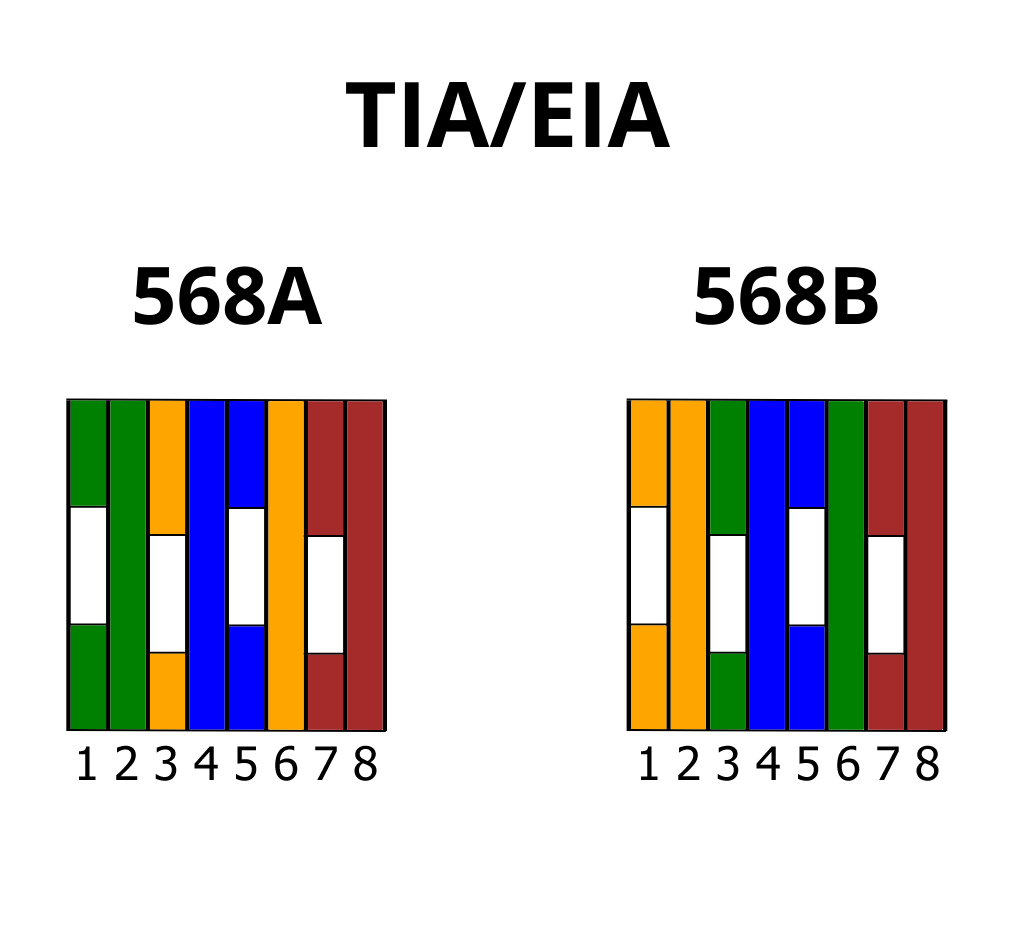
The difference is only in the arrangement of the wires on pins 1 through 8 of the connector:
T568A – Color Order
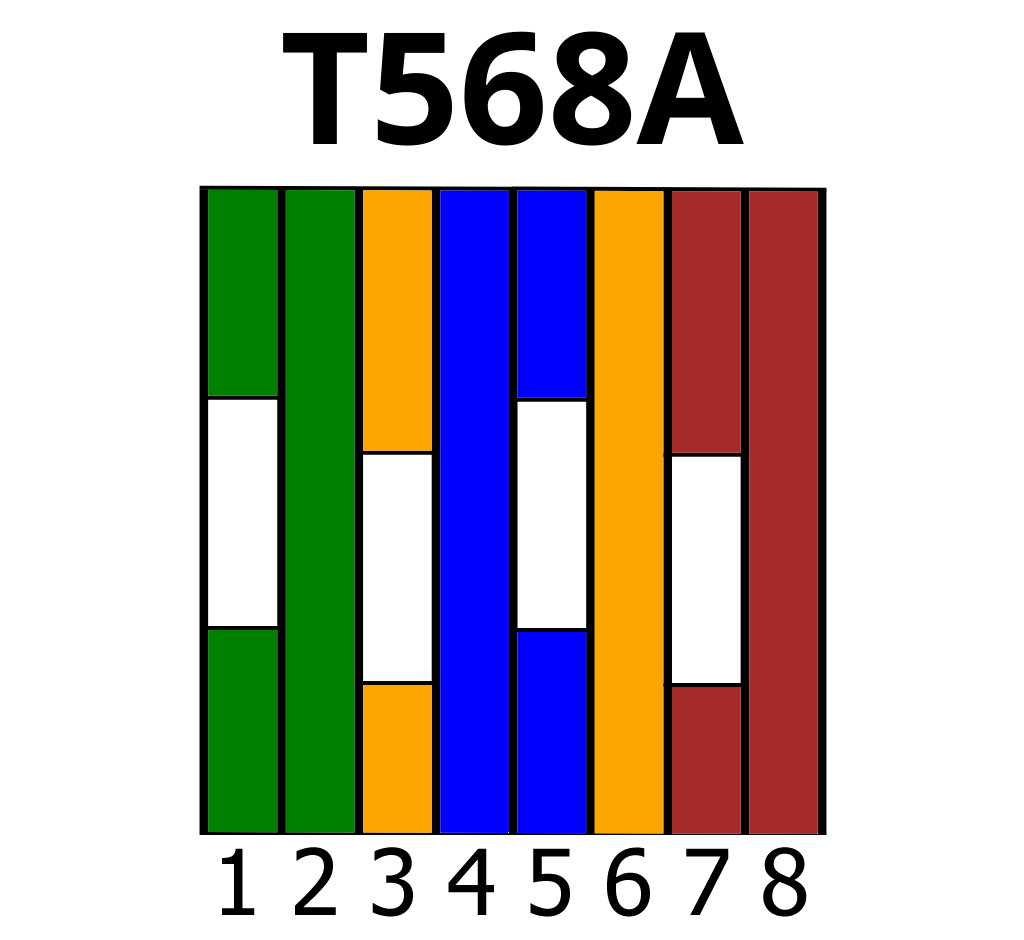
1-White/Green 2-Green 3-White/Orange 4-Blue 5-White/Blue 6-Orange 7-White/Brown 8-Brown
T568B – Color Order
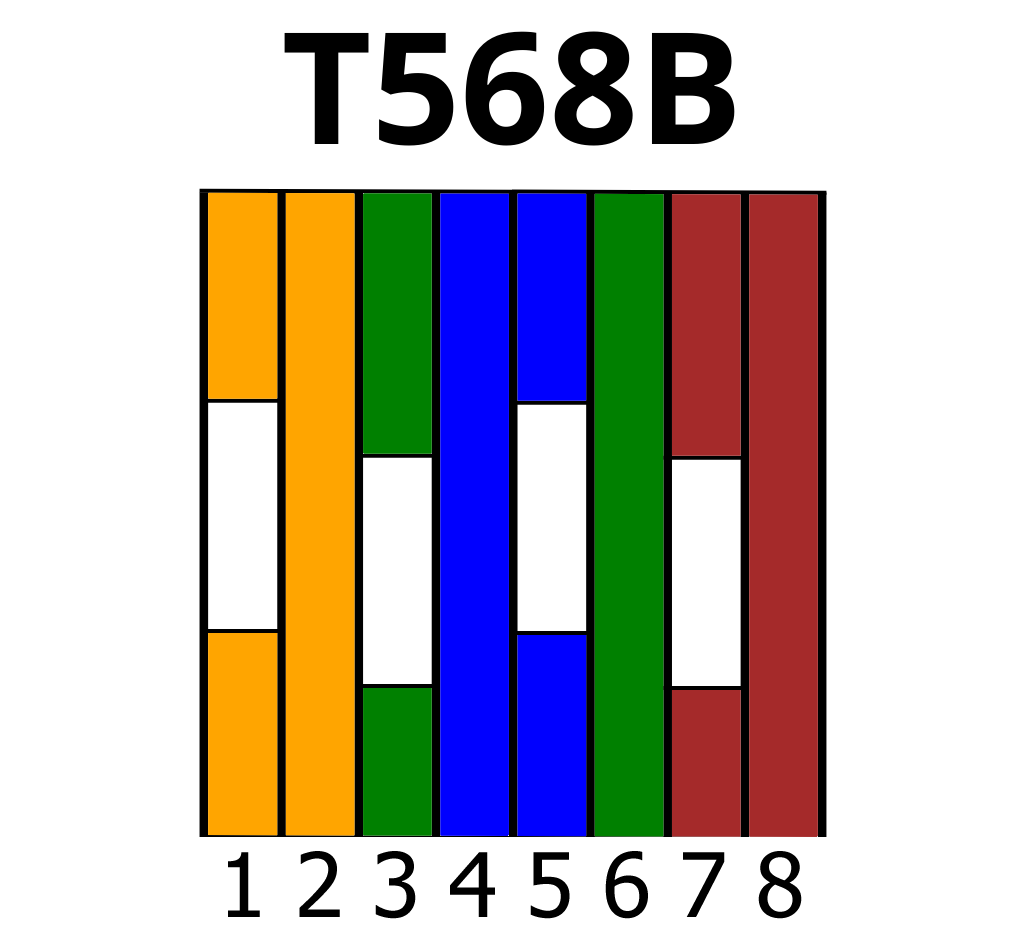
1-White/Orange 2-Orange 3-White/Green 4-Blue 5-White/Blue 6-Green 7-White/Brown 8-Brown
Which is the most widely used?
The most widely used standard in the industry (including commercial and residential markets) is T568B.
Reasons:
- It became the de facto standard for ISPs, installers, and IT companies.
- Greater compatibility with older equipment and legacy cabling systems (specifically in the US commercial market).
- Most common in corporate and residential environments.
- Reduces errors when everyone follows the same standard.
Due to market culture, many cable technicians exclusively use 568B.
Which standard does the norm recommend?
The TIA/EIA-568 standard technically recommends T568A as the preferred option for new installations—especially in government and federal buildings.
Why? Because it is considered more “universal” and backward compatible with old USOC telephone installations (where the green pair aligns with Pair 1).
However, this does not mean 568A is “better.” It simply means it was the initial normative recommendation for backward compatibility.
So: Which one should I use? (Practical Answer)
Here is the most important rule of all: Use the same standard on both ends.
Do not mix 568A on one end and 568B on the other, unless your goal is to create a crossover cable (which is largely obsolete today, as modern Network Interface Cards feature Auto-MDI/MDIX).
- ✔ For new corporate installations:
Use T568A if you are strictly following the standard or working on government contracts. - ✔ For residential installations and daily practice:
Use T568B, as it is the most common standard and avoids incompatibilities with ISPs. - ✔ For existing networks:
Always follow what is already installed to maintain standardization.
Technical difference between T568A and T568B: Is there any?
There is no performance difference.
Both support:
- Gigabit Ethernet
- 10 Gigabit Ethernet (depending on cable category)
- PoE and PoE+
- Equal frequencies in the same categories
Swapping the color order does not alter impedance, speed, or performance.
When to use T568A
Use it when:
- The project strictly demands compliance with TIA/EIA recommendations.
- Government or federal buildings require the standard.
- There is integration with legacy telephone systems.
- The entire existing infrastructure is already in Standard A.
When to use T568B
Use it when:
- The existing infrastructure already uses Standard B.
- It is a residential installation.
- Working with Internet Service Providers (who almost always use B).
- You want to maintain consistency with other technicians in the region.
- It is more practical and prevents errors.
When NOT to mix standards?
- Within the same rack.
- On the same floor.
- On the same patch panel.
- In corporate networks.
- During cable certification.
Mixing standards creates confusion, leads to errors, and complicates maintenance.
Final Thoughts
The choice between 568A and 568B does not change network performance; what really matters is maintaining the same standard throughout the installation.
Don’t worry about the practical side of assembling keystone jacks and RJ45 connectors: dedication and continuous practice are key. You will see that, over time, cable crimping will be done with total ease and speed.
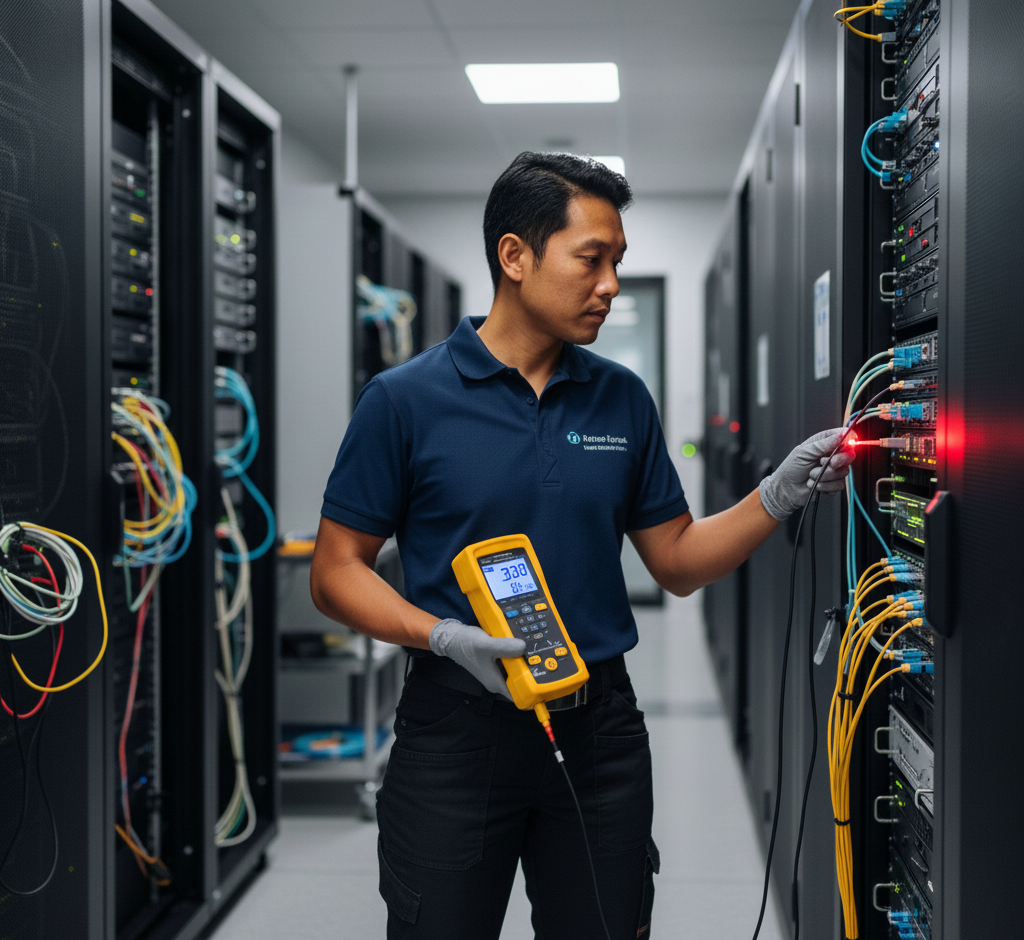
Installation validation does not end with crimping. It is crucial to use an appropriate cable tester to verify the integrity of the twisted pairs. This test confirms if the T568A or T568B sequence was respected and if all conductors are transmitting correctly, preventing future communication problems.
Summary:
- T568A = Recommended by the standard (and required for US Gov).
- T568B = Most used standard in the market.
- Both function perfectly.
- The worst choice is mixing standards unnecessarily.
- Always test to verify twisted pair integrity.