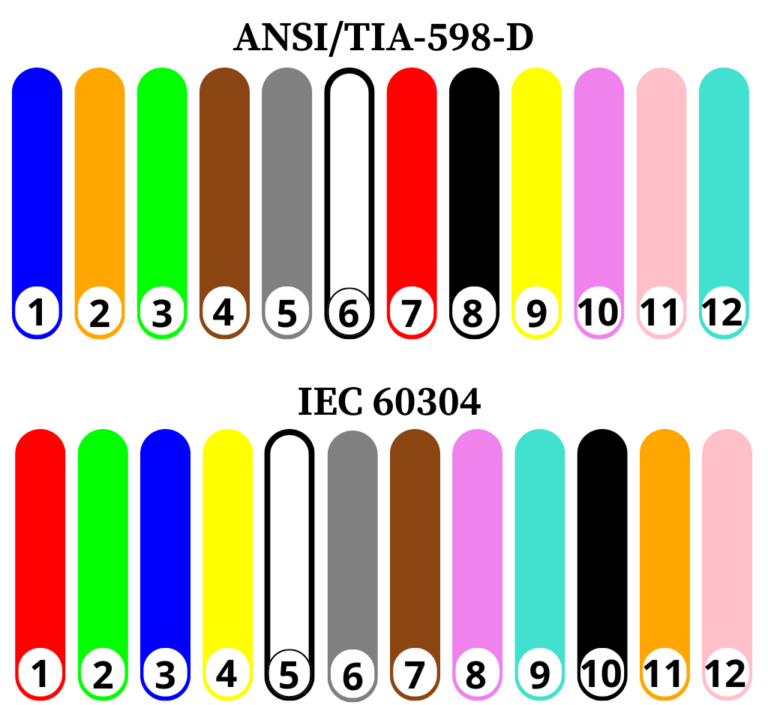
This image provides a crucial visual comparison between the two dominant fiber optic color coding standards: the North American ANSI/TIA-598-D and the global IEC 60304. Correctly identifying the 12 fiber colors is essential for all network installation, splicing, and maintenance work to ensure reliable fiber optic connectivity. The TIA-598-D standard, widely used in North America, specifies the following sequence for the 12-count fiber cable: Blue, Orange, Green, Brown, Slate (Gray), White (with a black trace/ring), Red, Black, Yellow, Violet (Purple), Rose (Pink), and Aqua (Turquoise). This is the standard sequence for fiber identification in most telecommunications infrastructure across the US and Canada. In contrast, the IEC 60304 standard, prevalent in Europe and many other international markets, follows a distinctly different order: Red, Green, Blue, Yellow, White (with a black trace/ring), Grey (Slate), Brown, Violet, Aqua, Black, Orange, and Rose. The key takeaway for technicians and engineers is the significant difference in the sequence. For instance, the first fiber (Fiber #1) is Blue under TIA but Red under IEC. Understanding and adhering to the correct regional or project-specific fiber optic standards is critical to prevent costly wiring mistakes and ensure proper network performance.

Global Optical Fiber Color Code Standards: A Complete International Guide