What is a Building Shaft (Riser) and How Does It Work?
A Shaft (often called a Riser or Vertical Chase in the US) is a vertical space within buildings—such as commercial offices, malls, hospitals, airports, and condos—used for routing, organizing, and maintaining infrastructure, especially electrical, plumbing, HVAC, and data networks.
For those working as Low Voltage Technicians (Cabistas) or Electricians, the shaft is one of the most critical locations on the job site, as it concentrates:
- Cable trays and conduits.
- Network cables (UTP), Fiber Optic, and Coax.
- Electrical wiring (High Voltage).
- Various piping systems.
- Automation and security systems.
How a Shaft (Riser) Works
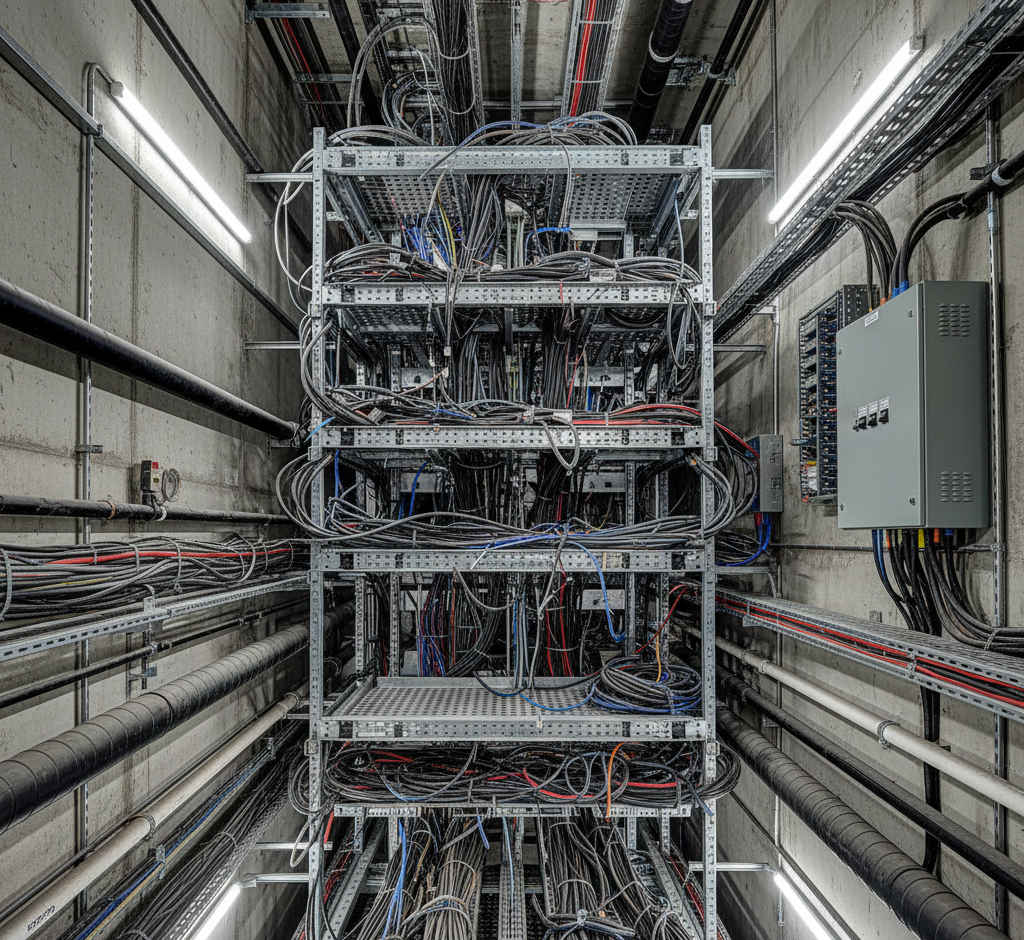
The shaft acts as a “Vertical Technical Corridor.” It allows pipes and cables to exit the technical room of one floor and rise to other floors without the need to break walls or interfere with the building’s physical structure.
1. Physical Structure
A typical shaft usually features:
- A continuous vertical space spanning multiple floors.
- Access panels or technical doors for professionals.
- Cable trays, ladder racks, and fixed supports.
- Identification of routes and infrastructure.
- Basic lighting and ventilation.
- Firestopping: Seals between floors to prevent fire spread (mandatory by code).
- Internal divisions to separate cable types (Power, Data, Plumbing).
2. Why is the Shaft important for networks?
Because it is the main pathway to connect:
- ✔ Technical Rooms (MDF/IDF)
- ✔ Different floors (Vertical Cabling)
- ✔ Telecom Racks
- ✔ Workstations (Network Drops)
- ✔ Security and Automation Systems
Without a shaft (riser), creating organized and secure routes for the network backbone would be nearly impossible.
3. What goes inside an IT Shaft?
The most common items include:
- Fiber Optics: The building’s Backbone (Riser Cable), usually with splices in enclosures or fiber distribution units.
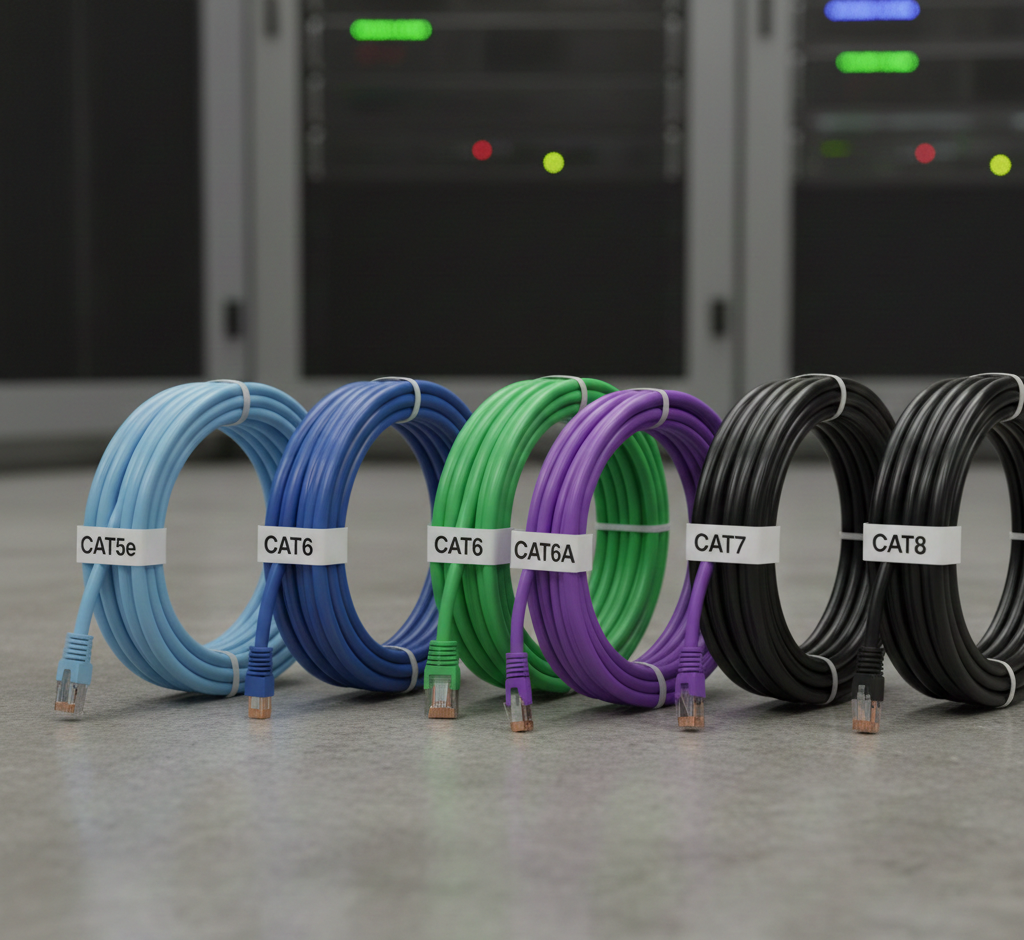
- UTP Cable (Cat5e, Cat6, Cat6a): Running from the floor rack to network drops, CCTV, or Access Control.
- Cable Trays and Ladder Racks: Responsible for organizing cables and facilitating maintenance.
- Conduits (EMT/Rigid): Carrying specific wires to rooms, retail stores, or sectors.
- Various Piping: HVAC, Fire Suppression (Sprinklers), Hydraulics, and BAS (Building Automation Systems).
4. Dry Shaft vs. Wet Shaft
In construction projects, there are two main types:
Dry Shaft (Dry Riser)
- Used for electrical infrastructure, data, and telecommunications.
- This is the area of interest for Cable Technicians and Electricians.
Wet Shaft (Wet Riser / Plumbing Chase)
- Used for hydraulic piping (water, sewage, drainage).
It is essential to keep these separate to avoid moisture problems, interference, or risks to cabling.
5. Working inside a Shaft
It is often a tight, confined environment with poor lighting that requires:
- Attention to fall hazards (floor penetrations are often open).
- Caution with active cables (Live Wires).
- Proper use of PPE (Personal Protective Equipment: Hard hat, gloves, safety glasses, steel-toed boots).
6. Best Practices inside a Shaft
✔ Separation between Electrical and Network Cables
Avoids EMI (Electromagnetic Interference) and follows NEC (National Electrical Code) standards.
✔ Professional Organization and Bundling
Use Velcro (Hook-and-Loop) straps instead of zip ties for data cables. Proper labeling is a must (ANSI/TIA-606-B standard).
✔ Respect Fiber Bend Radius
Prevents signal loss (attenuation) or fiber breakage.
✔ Observe Cable Tray Load Capacity
Avoids overweighting and future structural issues (Fill Ratio).
✔ Color Coding and Labeling
Facilitates future maintenance and troubleshooting.
Final Thoughts
Understanding the role of the shaft is fundamental. The shaft/riser is a crucial vertical technical space that serves as the “central spine” of a building’s infrastructure, ensuring the organization and functionality of essential cable pathways for networks, fiber optics, and communication systems.